
Habsburg Exhibition in Rome
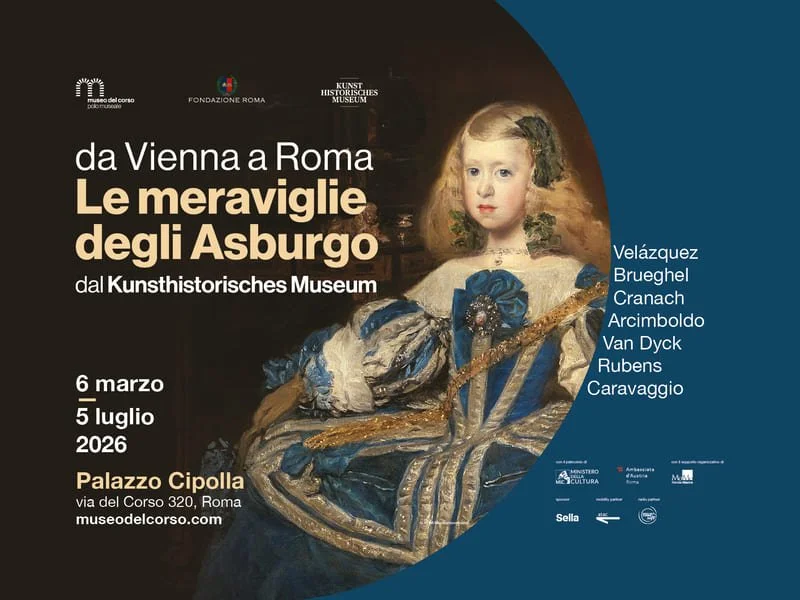
“From Vienna to Rome”: Habsburg Masterpieces Arrive in the Eternal City
This spring, Rome has become home to one of Europe’s most remarkable cultural exhibitions: From Vienna to Rome: The Wonders of the Habsburgs from the Kunsthistorisches Museum, now on display at Palazzo Cipolla through July 5, 2026. Organized in collaboration with Vienna’s famed Kunsthistorisches Museum, the exhibition brings together more than fifty masterpieces from the imperial Habsburg collections, many of which are being shown in Italy for the first time.
The exhibition traces four centuries of European artistic and political history through paintings, sculpture, decorative arts, and imperial commissions assembled by generations of Habsburg rulers. Works by masters such as Titian, Rubens, Veronese, Van Dyck, Caravaggio, and Brueghel offer visitors a glimpse into the extraordinary cultural world cultivated by one of Europe’s most influential dynasties.
More than a simple art exhibition, the collection serves as a portrait of the Habsburg vision itself. The House of Habsburg governed a vast and diverse empire stretching across Central Europe for centuries, uniting peoples, languages, and traditions under a shared Christian and imperial inheritance. Art became one of the dynasty’s principal means of expressing both political legitimacy and cultural identity. The exhibition highlights how emperors and archdukes commissioned and preserved works not merely for prestige, but as part of a broader understanding of beauty, learning, diplomacy, and Christian civilization.
For many Catholics and admirers of Blessed Karl of Austria, the exhibition also carries a deeper resonance. Though the artworks span centuries before his reign, they emerge from the same imperial tradition inherited by Emperor Karl, the last reigning sovereign of the Habsburg monarchy. Ascending the throne in 1916 amid the devastation of the First World War, Karl sought to govern according to Christian principles of justice, peace, and reconciliation. He became known for his repeated attempts to negotiate peace during the war, his concern for the poor and suffering, and his conviction that political authority must ultimately serve God and the common good.
Beatified by Pope St. John Paul II in 2004, Blessed Karl remains one of the twentieth century’s most compelling witnesses to Christian statesmanship. In many ways, exhibitions such as From Vienna to Rome remind modern audiences that the Habsburg legacy was not solely political, but deeply spiritual and cultural — rooted in a worldview that saw beauty, faith, and public life as intimately connected.
The exhibition itself reinforces this connection by presenting the imperial collections not simply as treasures of wealth, but as reflections of a civilization shaped by Catholic patronage, sacred symbolism, and a belief in the formative power of art. Curators describe the collection as a “dynastic self-portrait” of the Habsburg world, one that reveals how the empire understood itself and its mission within European history.
The choice of Rome as host city is particularly fitting. For centuries, the Habsburgs maintained close ties with the Holy See and understood their monarchy as carrying a special responsibility within Christian Europe. Bringing these treasures from Vienna to the Eternal City creates a symbolic dialogue between two historic centers of Catholic culture and memory.
As interest in the life and witness of Blessed Karl continues to grow internationally, exhibitions like this offer an opportunity not only to encounter extraordinary works of art, but also to reflect on the Christian civilization from which they emerged — a civilization that Emperor Karl, even in the twilight of the empire, sought faithfully to preserve.
To learn more about the exhibition, visit the Museo del Corso’s website.